
Stained Glass Pattern Buyer's Guide: Can This Pattern Actually Be Cut?
A beautiful listing image does not always tell you whether a stained glass pattern will be practical to make.
⬇ Download printable PDF (9 pages)
Some designs look spectacular in promotional images, with intricate details, dramatic lighting, and perfectly polished glass. These images can be created with AI tools, traditional digital illustration, professional photography, or a combination of techniques. A perfect-looking image does not automatically mean it is fake, and an AI-assisted image does not automatically mean the pattern is unusable.
The important question is whether the actual pattern is well designed, accurately represented, and practical to fabricate.
This guide will help you recognize design problems, evaluate the evidence behind a listing, and look beyond appearances before spending money.
What the Community Has Reported
Craft communities have raised concerns about designs that look convincing in promotional images but may be difficult to reproduce in glass. An appealing image does not prove a design has been tested as a practical pattern, and a polished image does not prove it is defective either. The examples below focus on specific construction issues visible in the designs shown.
I am grateful to Deleen and the members of the Stained Glass Patterns Facebook group for sharing their knowledge and helping make this guide more useful for pattern buyers.
Red Flags at a Glance
Needle-Thin, Tapering Pieces
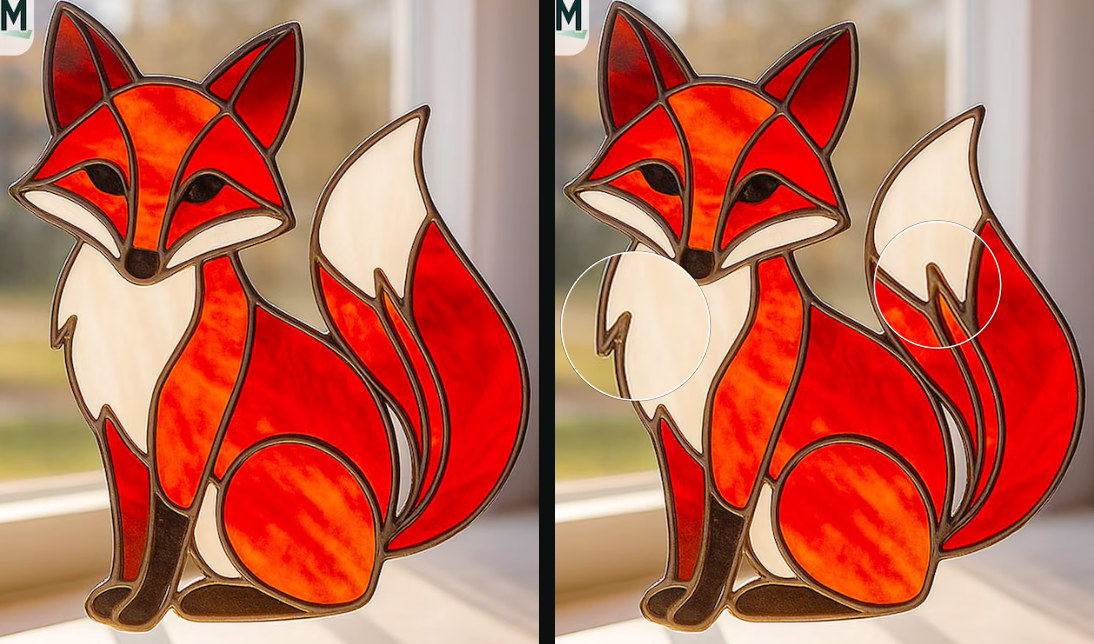
Long, needle-like shapes that narrow to almost nothing can be difficult or impossible to cut reliably from glass. The concern is not every pointed shape, but geometry that leaves too little material for practical cutting, grinding, and assembly.
Deep Inside Curves and Sharp Inside Corners
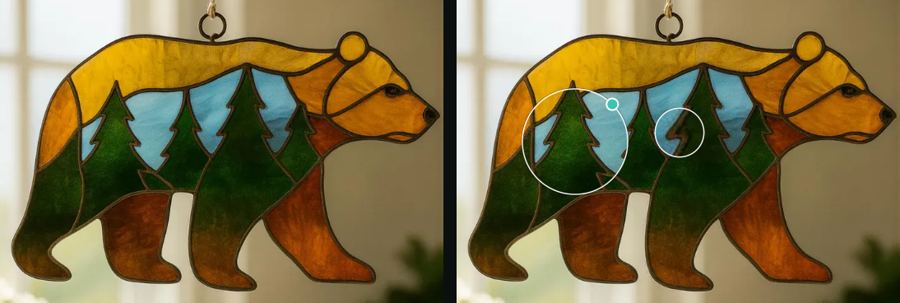
Concave notches, tight inside curves, and sharp internal corners can create fragile sections of glass. Some can be managed with suitable techniques; others require a different shape.
Tiny Enclosed Pieces
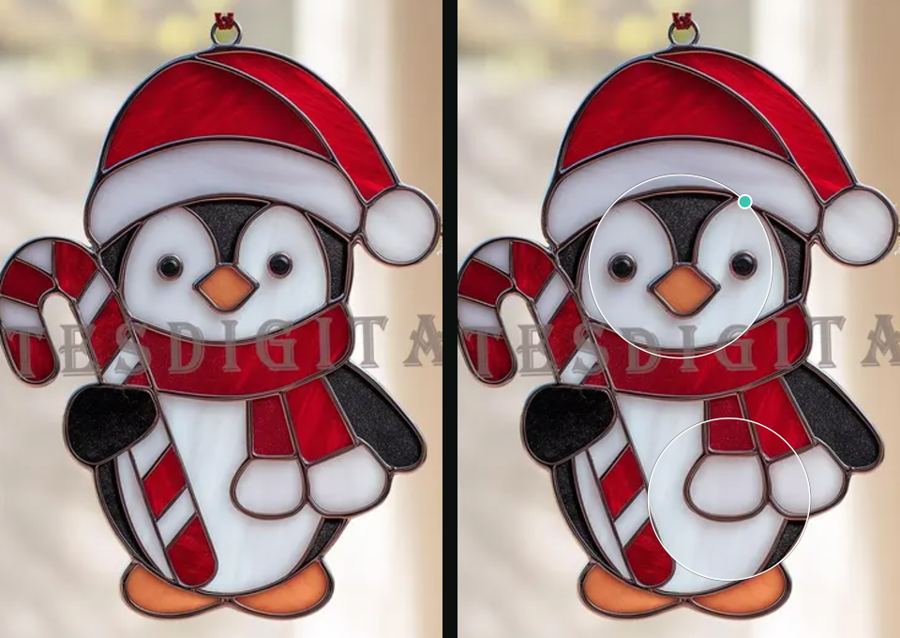
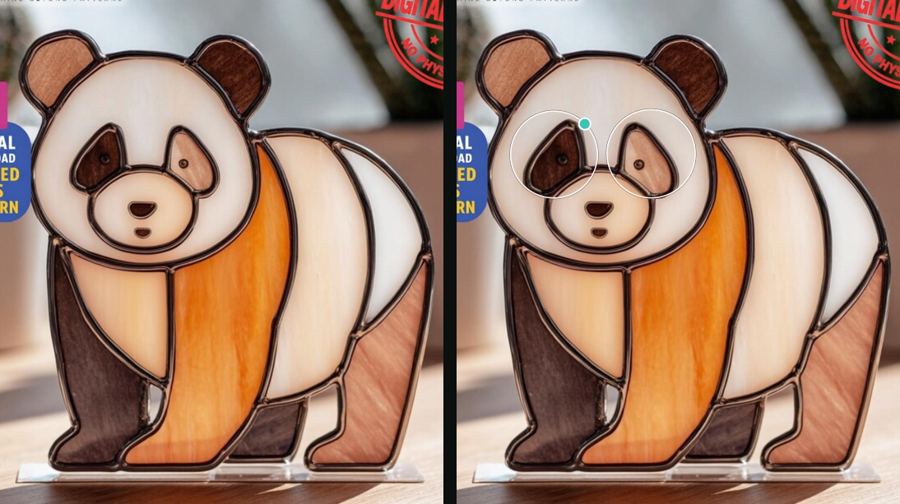
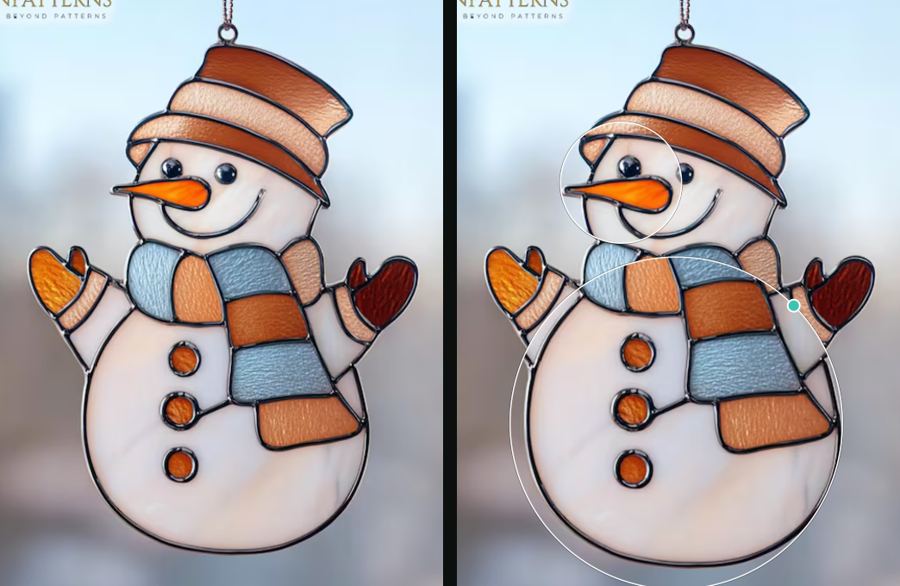
Small eyes, nostrils, buttons, and highlights can be difficult to hold, grind, and wrap in copper foil, especially in a small finished design. Check whether these details are large enough to fabricate at the advertised dimensions.
Eyes, buttons and similar details do not automatically mean a pattern is AI-made. These parts can also be made with black outline paint instead of cut glass.
Unclear or Incomplete Pattern Lines
A usable pattern should make it clear where each glass piece begins and ends. Lines that stop unexpectedly, fail to define a shape, or overlap confusingly may make assembly unclear.
The Finished Image and Pattern Do Not Match
Compare the visible divisions in the finished design with the lines in the pattern preview. Look for missing pieces, different shapes, or details in the promotional image that do not appear in the pattern.
No Clear Preview of the Actual Pattern
A polished concept image does not show whether the downloadable pattern contains practical, clearly defined pieces. Look for a readable preview of the actual pattern and enough product information to understand what is included.
Does the Seller Show a Real Preview of the Pattern?
Look for a real preview of the pattern being sold, one where you can clearly see the individual pieces and lines.
⚠ Beware of Artificial Social Proof
A busy comment section is not proof that a pattern can be made.
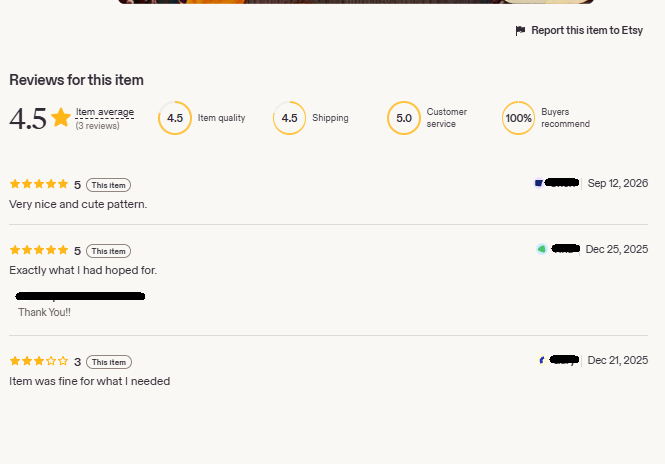
A product can appear trustworthy because of the activity surrounding it, not just because of its images.
Artificial social proof means creating the impression that a product is popular, recommended, or widely admired when the apparent interest may not be genuine.
For example, someone might create a Facebook group or use multiple accounts to manufacture engagement. One account posts a design, while another comments:
“This pattern is beautiful! Where can I get it?”
“Does anyone have this pattern?”
The exchange can make the design appear to have attracted spontaneous interest from an independent community.
Similar manipulation can occur on Etsy through suspiciously coordinated comments or reviews intended to make a shop or listing appear more popular or trustworthy.
What Should You Look For?
- Repetitive, generic praise: Many comments express excitement but provide little information about the actual pattern.
- Potentially coordinated promotion: Multiple accounts repeatedly promote the same products in ways that appear connected.
- Reviews without useful details: Praise alone tells you less than feedback about cutting, fitting, assembly, or the finished result.
- Promotional activity without substantive feedback: There may be plenty of comments but little information from customers about using the actual files.
None of these signs proves manipulation on its own. Genuine communities can be enthusiastic, and new shops may have little feedback.
Engagement is not independent validation.
Seven Examples of Design Problems
The examples below show specific design problems identified by examining each pattern's geometry. These are not simply beginner-level challenges: the highlighted shapes are difficult to cut reliably by hand, prone to breaking, or require specialized equipment such as a glass saw. Many workable designs begin as AI-assisted visualizations, so the question is whether the pieces themselves can be cut and assembled by hand.


Score a Listing
Tick what you see. This only points to questions worth asking, it is not a verdict on the seller.
Consider the evidence as a whole, and ask the seller for clarification when important details are missing.
How to Evaluate a Pattern Before Buying
Inspect the Actual Pattern Preview
Look for clearly defined individual pieces, narrow points, tight curves, tiny details, and lines that do not appear to close properly. A promotional image alone cannot establish whether the downloadable file contains the same shapes.
Check the Intended Finished Size
A small detail may be manageable at a larger scale but impractical at a smaller one. Consider how the individual pieces will be cut, ground, fitted, and joined at the dimensions you plan to make.
Ask the Seller Specific Questions
You can ask:
- What are the finished dimensions?
- How many individual glass pieces does the pattern contain?
- Which file formats are included?
A clear, specific answer helps you understand what you will receive.
Read Detailed Reviews
Look for feedback describing the actual download and the customer's experience using it. Search for terms such as “cut,” “impossible,” “doesn't match,” or “AI,” but assess each review based on its details rather than its rating alone.
Look for Evidence Beyond Promotional Images
A clear pattern preview and detailed customer feedback tell you more than a polished image or a busy comment section.
Already Bought a Pattern That Does Not Work?
If the downloaded pattern appears different from the listing, save the listing images, description, and the file you received. Compare them and contact the seller with a clear explanation of the specific mismatch.
If the issue remains unresolved, consult Etsy's current buyer protection and case procedures to determine whether your purchase qualifies. Digital downloads may be treated differently from physical products under return policies, so check the terms that apply to your order.
If the design is mostly sound but contains a few difficult shapes, an experienced maker may be able to simplify it by merging tiny pieces, rounding narrow tips, or adjusting internal corners. However, this changes the original design, and not every pattern can be made practical through simple modifications.
If you believe the listing is misleading, describe the specific discrepancy when contacting Etsy rather than assuming how the design was created.
Frequently Asked Questions
Can an AI-generated stained glass image be used to create a real pattern?
Sometimes, but the image alone is not enough. The design must be translated into practical shapes that can be cut and assembled from glass.
Does a realistic finished photo prove that the pattern works?
Not by itself. Look for consistency between the finished piece and the actual pattern being sold.
Are tiny glass pieces always a warning sign?
No. Small pieces can be intentional and workable. The concern is whether their size and geometry make fabrication impractical.
Can beginners use complex stained glass patterns?
Yes, if the design is technically workable and the maker has the necessary skills, tools, and patience. A challenging pattern and an unworkable pattern are different things.